Clear Answers for Your Sick Pet, Without Radiation or Pain
Ultrasound is a quick, painless way to look inside your dog or cat. It uses harmless sound waves instead of the radiation used for x-rays, so we can see organs, soft tissue and fluid in real time while your pet rests comfortably on the table.
At Rock Knoll Animal Hospital in Oklahoma City, OK , ultrasound works alongside our other diagnostic tools to help us find out what’s making your pet feel unwell. The sooner we pinpoint the problem, the sooner we can start the right treatment and get your companion back to their normal, happy self.
What an Ultrasound Shows Us
An x-ray gives us an excellent view of bones and the general outline of organs, but it can’t always show what’s happening inside soft tissue. Ultrasound fills that gap. The real-time images let us look at the size, shape and texture of internal organs, check for fluid where it shouldn’t be, and watch structures move as your pet breathes. Many pets benefit from both tests, which is why ultrasound pairs so well with our advanced digital x-rays.
We may recommend an ultrasound to take a closer look at:
- The liver, gallbladder, spleen and pancreas
- The kidneys, bladder and urinary tract, including stones or thickened bladder walls
- The stomach and intestines when a pet has ongoing vomiting, diarrhea or a suspected blockage
- Masses, lumps or enlarged lymph nodes found during an exam
- Free fluid in the abdomen or around the chest
- The reproductive organs, including pregnancy confirmation
Signs Your Pet May Need an Ultrasound
Ultrasound usually comes into the picture when your pet has symptoms that blood work or an exam alone can’t fully explain. Our veterinarians may suggest one if your dog or cat is:
- Vomiting repeatedly or has chronic diarrhea
- Losing weight or has a poor appetite without a clear reason
- Drinking or urinating more than usual
- Showing a swollen or painful belly
- Straining to urinate or passing blood in the urine
- Showing abnormal results on blood or urine tests
Lab results from our in-house laboratory often guide where we look first. Together, blood work and imaging give us a much fuller picture of your pet’s health in a single visit.
What to Expect During Your Pet’s Ultrasound
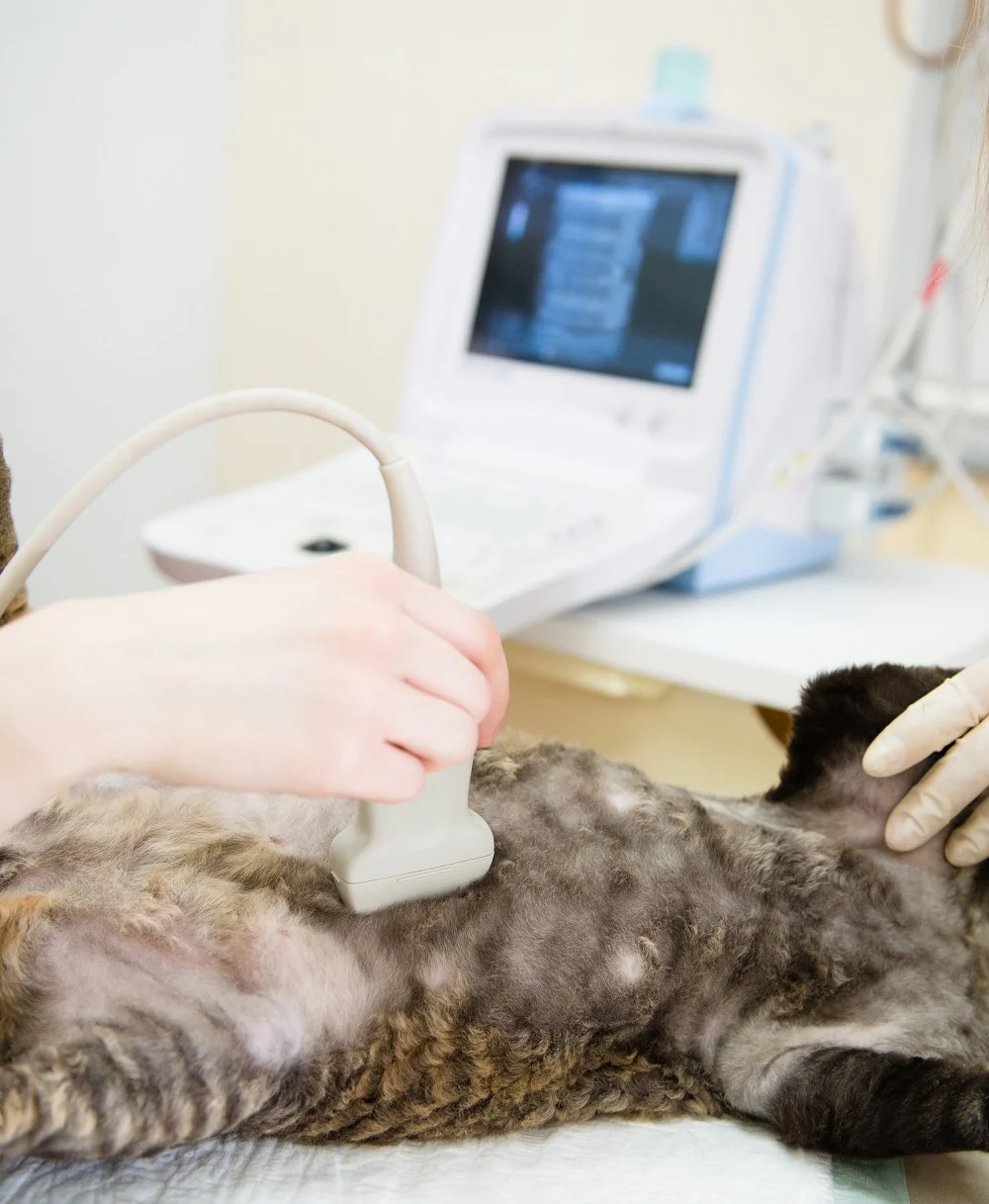
Most ultrasounds are calm, comfortable and finished in a short time. We’ll usually shave a small patch of fur over the area we’re examining so the probe makes good contact with the skin, then apply a water-based gel. Your pet lies on a padded surface while our team gently holds them and moves the probe over the area. There’s no needle and no incision for the scan itself.
Many pets stay relaxed throughout. If your pet is anxious or uncomfortable, we’ll talk with you about options to keep them calm. For abdominal scans, we may ask you to withhold food for several hours beforehand, since a full stomach can make some organs harder to see. We’ll give you specific instructions when you schedule.
Turning Answers Into a Treatment Plan
An ultrasound is only as useful as what we do with the results. Once we’ve reviewed the images, we’ll walk you through what we found in plain language and explain your options. That plan may include medication, a special diet, follow-up monitoring or, when needed, surgery performed right here at our hospital. Because we handle diagnostics and treatment under one roof, your pet moves from answers to care without unnecessary delays.
Pet Ultrasound FAQs
Is ultrasound safe for my pet?
Yes. Ultrasound uses sound waves, not radiation, so it is a very safe imaging method for dogs, cats and other pets. It can be repeated when needed to monitor a condition over time.
Does an ultrasound hurt?
No. The scan is painless. Your pet may feel the cool gel and the gentle pressure of the probe, but there are no needles or incisions involved in the scan itself.
Will my pet need to be sedated?
Many pets lie still comfortably without sedation. If your pet is very anxious, painful or wiggly, our veterinarians may discuss mild sedation with you to keep them relaxed and help us get clear images.
How should I prepare my pet for an ultrasound?
For abdominal scans, we may ask you to withhold food for several hours before the appointment because a full stomach can block the view of some organs. Our team will give you clear instructions when you book the visit.
Why will my pet’s fur be shaved?
Fur traps air, which interferes with the sound waves. Shaving a small area lets the probe make good contact with the skin so we can see the organs clearly. The fur grows back on its own.
What is the difference between an ultrasound and an x-ray?
X-rays are excellent for bones and the overall size and shape of organs, while ultrasound shows the inside of soft tissue and organs in real time. The two tests often work together to give a complete picture.
When will I get the results?
In many cases, our veterinarians can share initial findings soon after the scan. We’ll explain what the images show and talk through next steps for your pet’s care.
Get Your Pet the Answers They Need
If your dog or cat isn’t acting like themselves, don’t wait and wonder. Call Rock Knoll Animal Hospital at (405) 634-5700 or request an appointment online, and our team in Oklahoma City, OK will help you find out what’s going on and how to help.