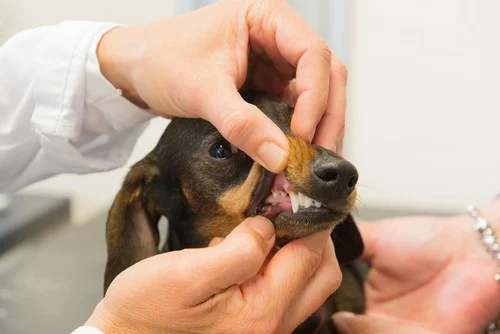
Fresher Breath, Healthier Gums and a Pain-Free Smile
Bad breath is often the first sign that something is wrong in your pet’s mouth. That strong odor usually comes from bacteria, plaque and inflamed or decaying gum tissue. As plaque hardens into tartar, it pushes below the gum line, where it can erode the bone and tissue that hold the teeth in place. Left untreated, this leads to loose teeth, chronic pain, and bacteria that can travel through the bloodstream and affect other organs. At Rock Knoll Animal Hospital in Oklahoma City, we help dogs and cats keep their teeth and gums healthy at every stage of life.
Most dental problems can be prevented, but other conditions sometimes make treatment more involved. Some pets develop tooth root problems or issues with the temporomandibular joint (TMJ), the hinge that connects the jaw to the skull. Misaligned bites (malocclusions), jaw injuries, and weakened bone can cause pain and reduced sensation in and around the mouth. In serious cases a pet may need urgent veterinary attention. The most reliable way to prevent these problems is an annual professional teeth cleaning and oral exam. At Rock Knoll Animal Hospital in Oklahoma City, our team gives your pet the dental care it needs to stay comfortable and healthy.
What Happens During a Veterinary Dental Cleaning?
For your pet’s safety and comfort, we place your pet under anesthesia for a dental cleaning, unless a medical issue calls for a different approach, which we will discuss with you first. Our veterinarian uses specialized instruments to remove plaque and tartar from every tooth surface, including below the gum line. We then polish the teeth with a special paste that smooths the enamel and makes it harder for new plaque to stick. We also check each tooth for fractures or infection, so broken or diseased teeth do not go unnoticed. Next, we apply a fluoride treatment to strengthen the teeth and reduce sensitivity. Finally, we examine the gum line closely, because many dental problems cannot be seen on the surface.
Benefits of Good Dental Hygiene for Pets
Good dental hygiene helps your pet avoid bleeding gums, broken or loose teeth, mouth ulcers, and painful infections. Periodontal disease starts when bacteria build up on the teeth and form plaque. Over time, plaque hardens into tartar and causes gingivitis, a red and inflamed gum line. As the disease advances, it infects the tooth roots and loosens the teeth.
If gingivitis is not treated, the infection keeps damaging the bone that supports the teeth. Bacteria can then enter the bloodstream and cause lasting damage to the kidneys, liver, and heart. Regular dental care also protects your pet from fractured teeth. Pets with weakened teeth who chew on very hard toys, bones, or antlers can crack a tooth, which leads to infection and significant pain.
Why Oral Health Matters So Much for Dogs and Cats
By age three, most dogs and cats already show some signs of periodontal disease. Pets are very good at hiding pain, so many owners do not realize their pet has a sore mouth until the problem is advanced. A pet with dental disease may keep eating while chewing on one side, swallowing food whole, or quietly losing interest in treats and toys. Routine dental care at Rock Knoll Animal Hospital finds these problems early, when they are easier and less costly to treat.
Your pet’s mouth is also a window into overall health. The bacteria that cause gum disease are linked to problems in the heart, kidneys, and liver. Keeping the mouth clean is one of the simplest ways to support a longer, more comfortable life for your companion.
Signs Your Pet May Have a Dental Problem
Schedule a dental exam if you notice any of the following:
- Bad breath that does not go away
- Yellow or brown buildup on the teeth
- Red, swollen, or bleeding gums
- Loose, broken, or discolored teeth
- Drooling, pawing at the mouth, or rubbing the face on the floor
- Dropping food, chewing on one side, or reluctance to eat hard food
- Swelling below the eye or along the jaw
- Weight loss or a change in behavior, such as irritability or hiding
Thorough Exams and Imaging
A cleaning is more than removing visible tartar. Up to two-thirds of each tooth sits below the gum line, which is why we evaluate the roots and supporting bone as part of a complete dental assessment. When needed, we use advanced digital X-rays to look for root infections, bone loss, and hidden fractures. Pre-anesthetic blood work from our in-house laboratory helps us confirm your pet is a safe candidate for anesthesia, and results are often available the same day.
When Treatment Goes Beyond a Cleaning
If we find badly damaged or infected teeth, your pet may need extractions or other oral procedures. Our team provides dental surgery in the same safe, monitored setting as our cleanings, and we send your pet home with a pain management plan so recovery is as comfortable as possible.
Keeping Your Pet’s Teeth Healthy at Home
Professional cleanings work best alongside good habits at home. Daily brushing with a pet-safe toothpaste is the gold standard. Never use human toothpaste, which can be toxic to pets. Dental chews, water additives, and specially formulated dental diets can also help slow tartar buildup. Our team can recommend products that fit your pet, and our nutritional counseling can help you choose a diet that supports oral health. We also check your pet’s teeth at every wellness exam, so problems are caught between cleanings.
Dental Care for Every Stage of Life
Good dental habits start early. During puppy and kitten care visits, we check for retained baby teeth and bite problems, and we show you how to get your new pet used to having its mouth handled. For adult and senior pets, annual cleanings combined with preventative care help protect teeth well into the golden years. If your pet ever breaks a tooth or suffers a mouth injury, contact us right away. We offer emergency and urgent care during business hours.
New to our practice? Visit our new clients page to learn what to expect at your first visit, or call (405) 634-5700 with any questions.
Questions Pet Owners Ask About Teeth Cleanings
How often does my pet need a professional dental cleaning?
Most dogs and cats benefit from a professional cleaning once a year. Small breeds, flat-faced breeds, and pets with a history of gum disease may need cleanings more often. Our veterinarian will recommend a schedule based on your pet’s exam.
Why does my pet need anesthesia for a dental cleaning?
Anesthesia allows us to clean below the gum line, take X-rays, and examine every tooth safely and thoroughly without causing stress or pain. Your pet is closely monitored throughout the procedure, and pre-anesthetic blood work helps confirm it is safe.
Is anesthesia-free teeth cleaning a good option?
Anesthesia-free cleanings only scrape the visible surfaces of the teeth. They cannot reach below the gum line, where periodontal disease does the most damage, and they can give a false sense that the mouth is healthy.
What are the signs of dental disease in pets?
Common signs include bad breath, tartar buildup, red or bleeding gums, loose or broken teeth, drooling, pawing at the mouth, and trouble eating. Many pets hide mouth pain, so regular exams are important even if you notice no symptoms.
Can dental disease affect my pet’s overall health?
Yes. Bacteria from infected gums can enter the bloodstream and contribute to damage in the heart, kidneys, and liver. Treating dental disease protects your pet’s whole body, not just its mouth.
How can I care for my pet’s teeth at home?
Brush your pet’s teeth daily with a pet-safe toothpaste, and consider veterinarian-recommended dental chews, water additives, or dental diets. Avoid very hard chews such as bones and antlers, which can fracture teeth.
What happens if my pet needs a tooth removed?
If a tooth is badly damaged or infected, we may recommend an extraction during the dental procedure. Your pet will receive pain relief, and we will give you clear home-care instructions. Most pets eat comfortably again within a few days.
Book Your Pet’s Next Teeth Cleaning
Fresh breath, comfortable chewing, and a healthier body all start with a clean mouth. Call Rock Knoll Animal Hospital at (405) 634-5700 or request an appointment online to schedule your pet’s dental exam and cleaning in Oklahoma City, OK .