A Permanent Way Home for Your Pet
Losing a beloved dog or cat to theft, an open gate, or a storm-spooked escape is every pet owner’s nightmare. Our Oklahoma City veterinarian recommends microchipping as the most reliable way to make sure a lost pet can be identified and returned to you. At Rock Knoll Animal Hospital, placing a microchip takes only a moment and can be done during a routine visit, giving your family lasting peace of mind.
A microchipped pet has a far greater chance of making it back home than a pet without one. Only about one in every five dogs that arrive at a shelter each year is ever reunited with its owner. For cats, the outlook is even more discouraging, with only about a 2 percent chance of returning to their families. A microchip changes those odds by giving shelters and veterinary clinics a dependable way to find you.
Microchips are also remarkably low-maintenance. They are made by several manufacturers, and every chip is designed to last longer than the pet who carries it, so there are no batteries to replace and nothing to recharge. Owners simply register their contact information with the chip manufacturer’s database and keep that information up to date whenever they move or change phone numbers. During wellness exams, our Oklahoma City team scans your pet to confirm the chip is still in place and reading correctly.
Placing a microchip is safe, quick, and well tolerated by dogs and cats of all sizes. You can schedule a dedicated appointment for the procedure or simply add it on to another visit, such as a vaccination appointment or spay and neuter surgery.
Unlike collars and tags, which can slip off, break, or be removed, a microchip stays with your pet for life. For the best protection, our doctor recommends pairing a microchip with a breakaway collar that holds clearly readable ID tags, so anyone who finds your pet can contact you right away.
What to Expect During the Procedure
A microchip is a tiny electronic device sealed inside a biocompatible glass capsule. It is about the size and shape of a grain of rice, and our veterinarian can place it in just a few seconds.
The chip is placed just under the skin with a hypodermic needle, usually between the shoulder blades. Most pets react about the same way they would to a routine vaccine, and any discomfort is brief and mild. No recovery time is needed, and your pet can go right back to normal activities.
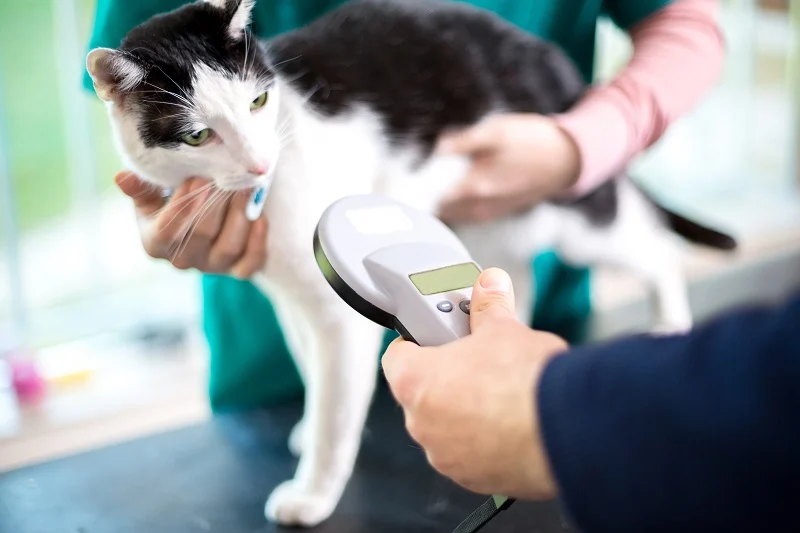
Every chip carries a unique identification number assigned by the manufacturer. When an unidentified animal is brought to a veterinary practice, animal shelter, or police station, staff members pass a handheld scanner over the pet. If a chip is present, its number appears on the scanner. As long as your contact information is current in the registry, the staff can reach you and start the process of bringing your pet home.
Microchip Identification for Dogs, Cats and More
At Rock Knoll Animal Hospital, we see microchipping as one of the simplest and most effective steps you can take to protect your pet. Pets do not have to be outdoor wanderers to get lost. Indoor cats slip out open doors, dogs dig under fences or bolt during Oklahoma thunderstorms and Fourth of July fireworks, and pets can become separated from their families during moves, travel, or severe weather. A microchip makes sure your pet always carries your connection to home, even if their collar is gone.
When Should a Pet Be Microchipped?
Puppies and kittens can be microchipped at a young age, and many owners choose to have it done during early vaccine visits or at the time of spay or neuter surgery while their pet is already under anesthesia. If you are welcoming a new family member, our puppy and kitten care visits are a great time to talk about microchipping. Adult and senior pets benefit just as much, and it is never too late to add this protection.
Keeping Your Registration Up to Date
A microchip is only as useful as the information connected to it. After your pet is chipped, be sure to:
- Register the chip number with the manufacturer’s database as soon as possible.
- Update your phone number, address, and email any time they change.
- Add a backup contact, such as a family member or trusted friend.
- Keep a record of your pet’s chip number with their medical records.
- Ask us to scan your pet at each annual visit to confirm the chip is working.
Microchips, Travel and Health Certificates
Many international destinations require pets to have an ISO-compliant microchip before they can enter the country, and some airlines and boarding facilities ask about microchip identification as well. If you are planning a trip with your pet, our team can scan or place a chip and help you prepare the paperwork you need through our health certificate service.
Regular Checkups Keep Your Pet Protected
We check your pet’s microchip during routine wellness exams so you can feel confident it is still in place and readable. These visits are also a good time to update your contact information and ask any questions about your pet’s safety and overall health.
Pet Microchipping FAQs
Does microchipping hurt my pet?
Microchipping feels similar to a routine vaccination. The chip is placed under the skin with a needle in just a few seconds, and most pets have only brief, mild discomfort with no recovery time needed.
Is a microchip a GPS tracker?
No. A microchip does not track your pet’s location. It is a permanent ID that stores a unique number, which a shelter or veterinary clinic can scan and match to your contact information in the manufacturer’s registry.
How long does a microchip last?
Microchips have no battery and are designed to last longer than your pet’s lifetime. Once placed, the chip typically never needs to be replaced.
At what age can my puppy or kitten be microchipped?
Puppies and kittens can be microchipped at a young age. Many owners choose to do it during an early wellness visit or at the time of spay or neuter surgery. Our veterinarian can recommend the best timing for your pet.
Do indoor cats need a microchip?
Yes. Indoor cats can slip outside through an open door or window, and lost cats have a very low chance of being returned home without identification. A microchip gives your cat permanent ID if they ever get out.
What do I need to do after my pet is microchipped?
Register the chip with the manufacturer’s database and keep your contact information current. If you move or change your phone number, update the registry right away so you can be reached if your pet is found.
Should my pet still wear a collar and tags?
Yes. Our doctor recommends a microchip plus a breakaway collar with ID tags. Tags let anyone who finds your pet contact you quickly, while the microchip provides backup identification that cannot fall off.
Give Your Pet a Lifelong Link to Home
A few seconds today can make all the difference if your pet ever goes missing. Schedule microchipping at Rock Knoll Animal Hospital in Oklahoma City, OK on its own or alongside your pet’s next visit. Call us at (405) 634-5700 or request an appointment online.